
Folded Floor, Continuing Memory
Sohn Younwon has developed an ongoing body of installation work that reconfigures the sensory and structural conditions of space through the floor. Translating everyday environments such as the living room into the language of exhibition space, her practice materializes a state between dwelling and movement through foldable aluminum floors. Even after an exhibition ends, these floors are folded, stored, and later reassembled elsewhere, allowing a single space to persist as a structure that is repeatedly relocated and transformed. In this way, her work engages with the condition of contemporary dwelling-not as a fixed site, but as something temporary and fluid.
Sohn Younwon received the Amado Artist Award from Amado Art Space, and in her upcoming solo exhibition scheduled for July 2026, she plans to unfold and re-present the aluminum floors from her previous exhibition.
Lying down, one regulates their breath, shifting their gaze from the ceiling to the wall, and then to the floor. Turning the head, objects come into view, and distant sounds are perceived. Sensation slowly awakens, and warmth lingers in the body without fully dissipating.
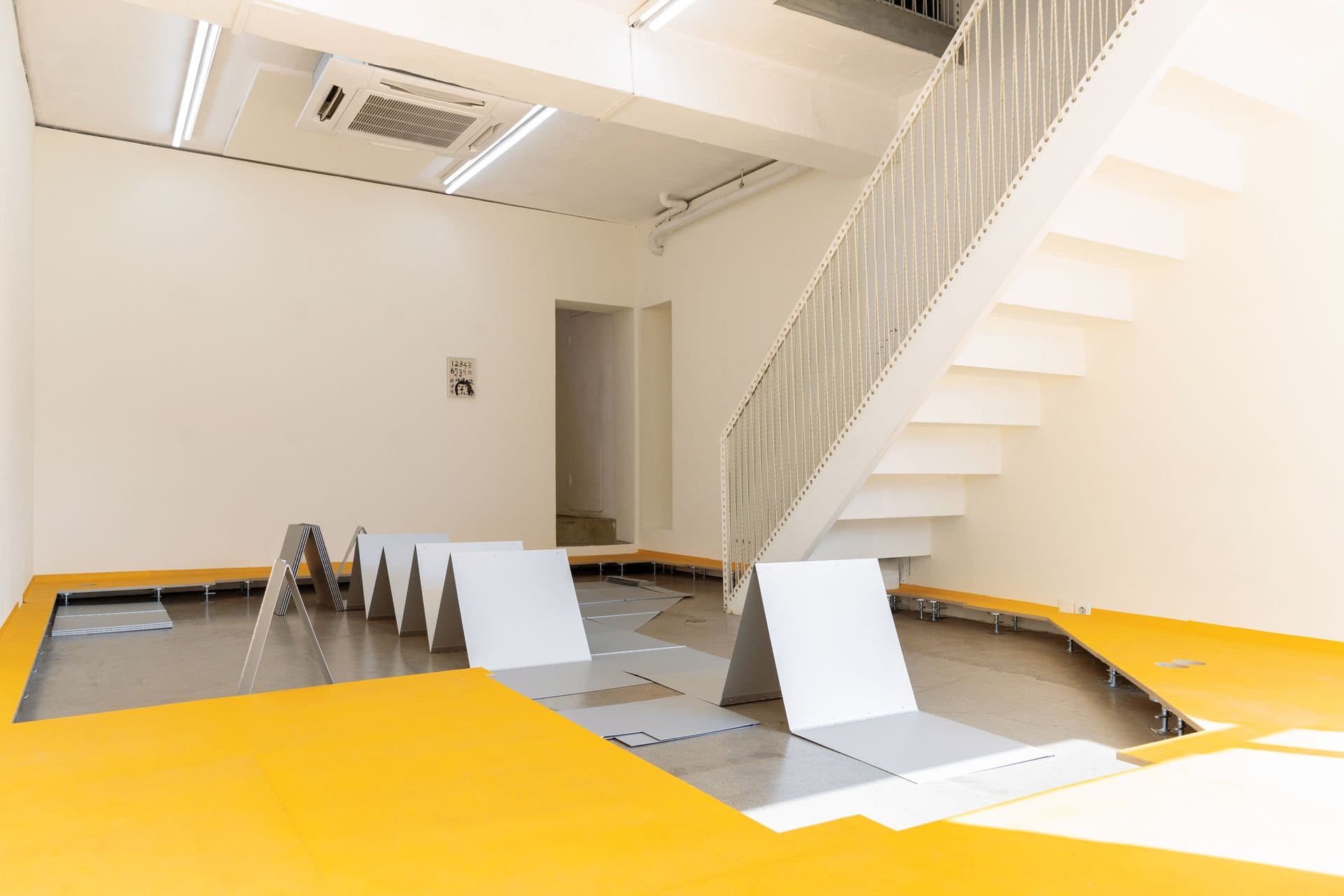
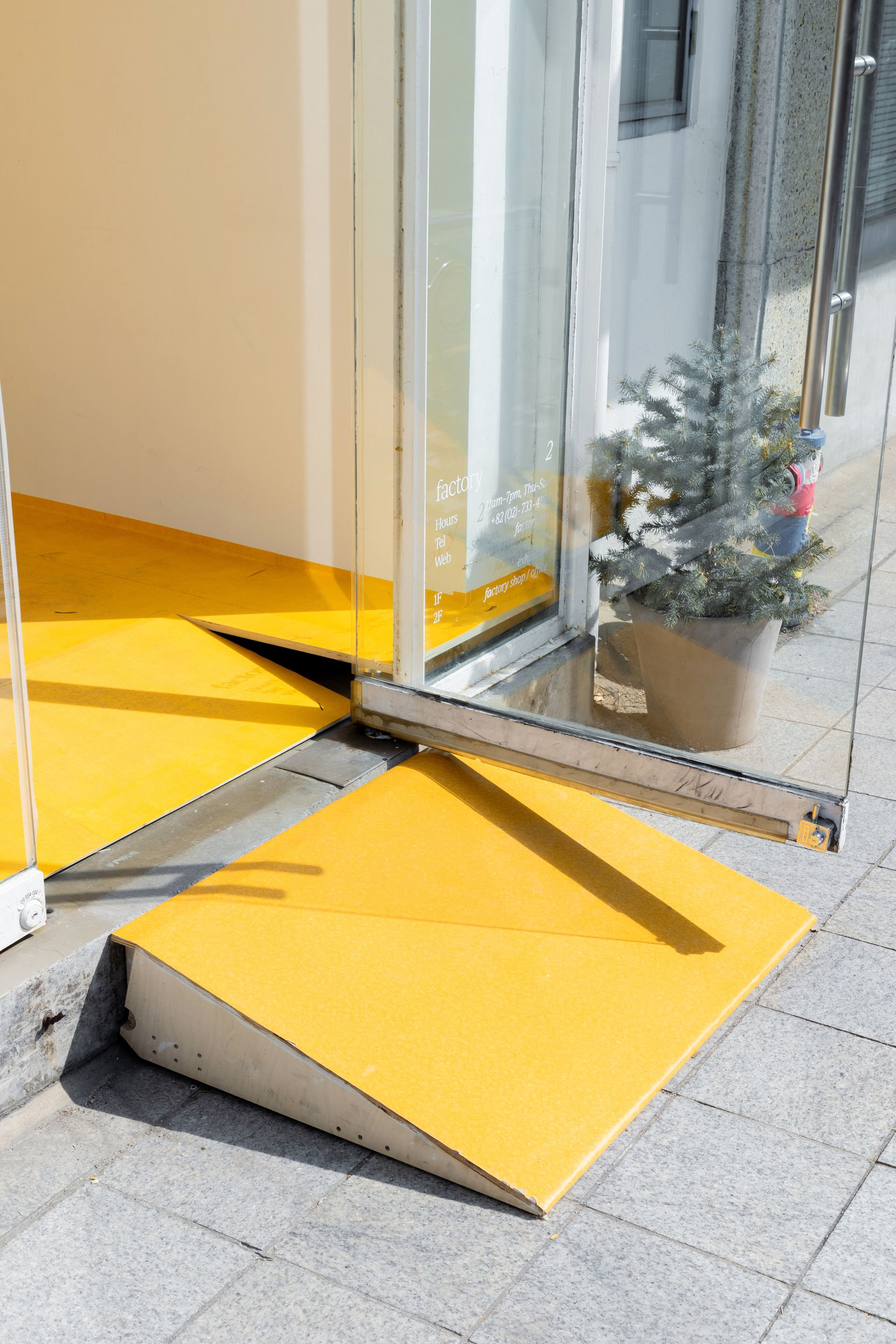
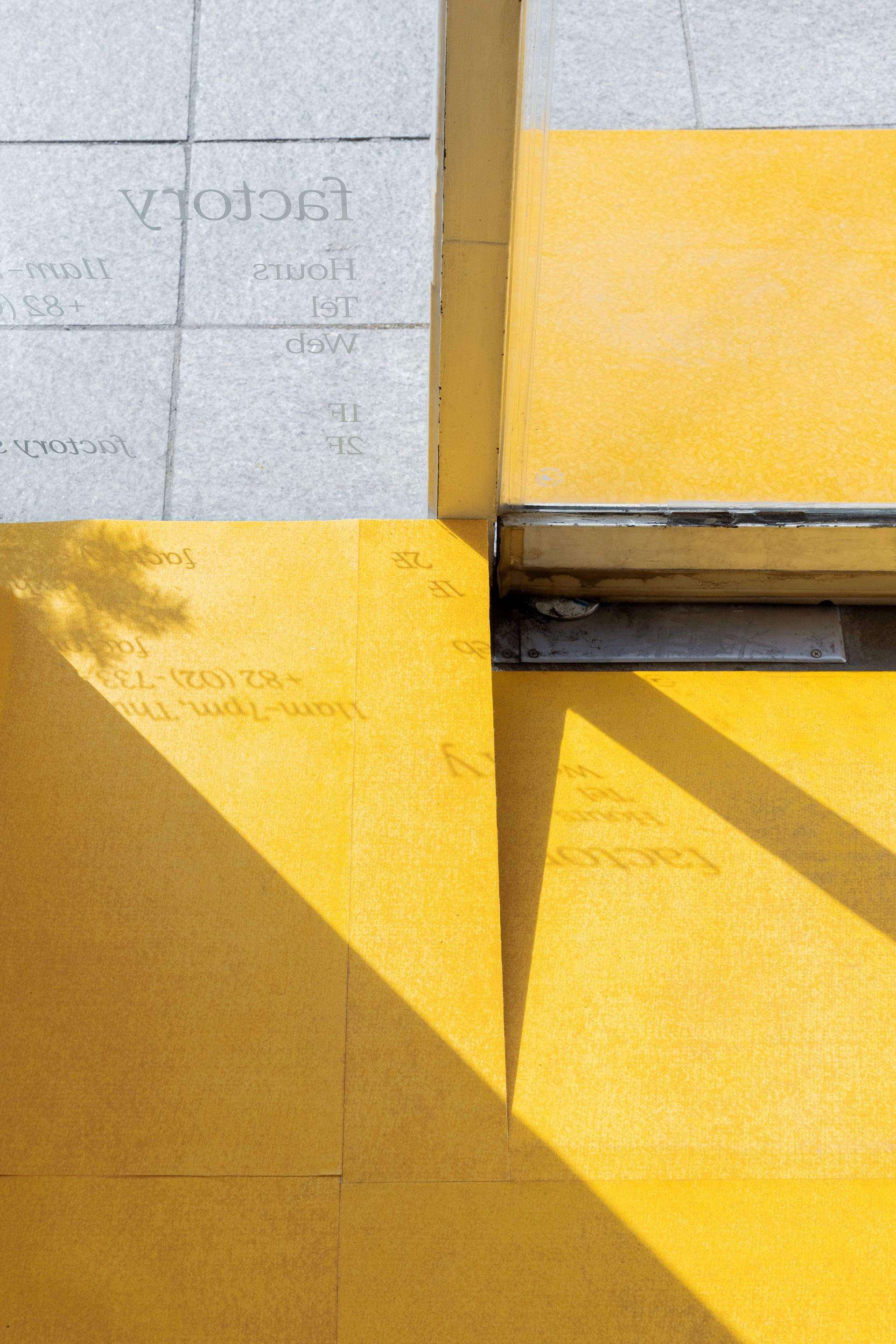
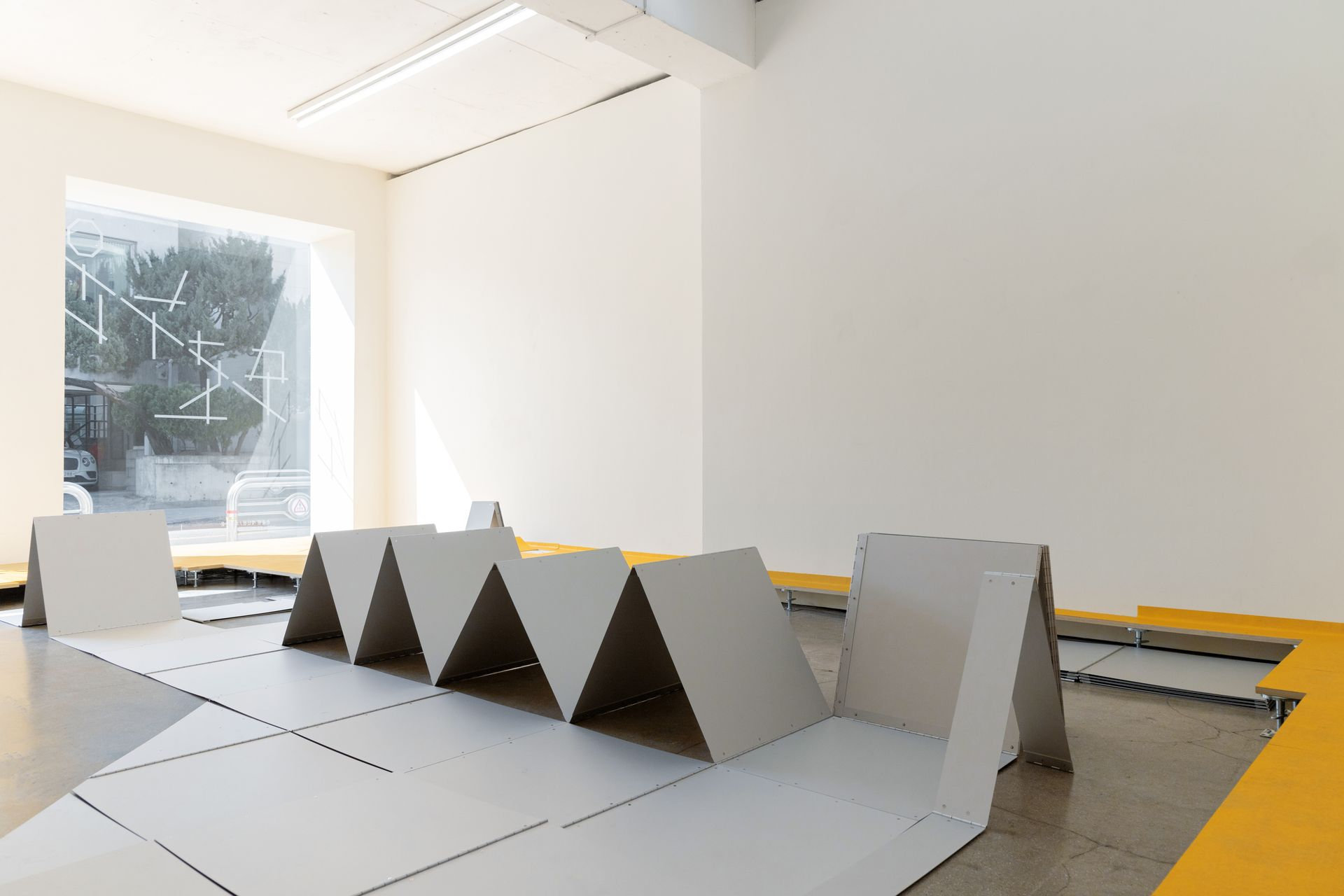
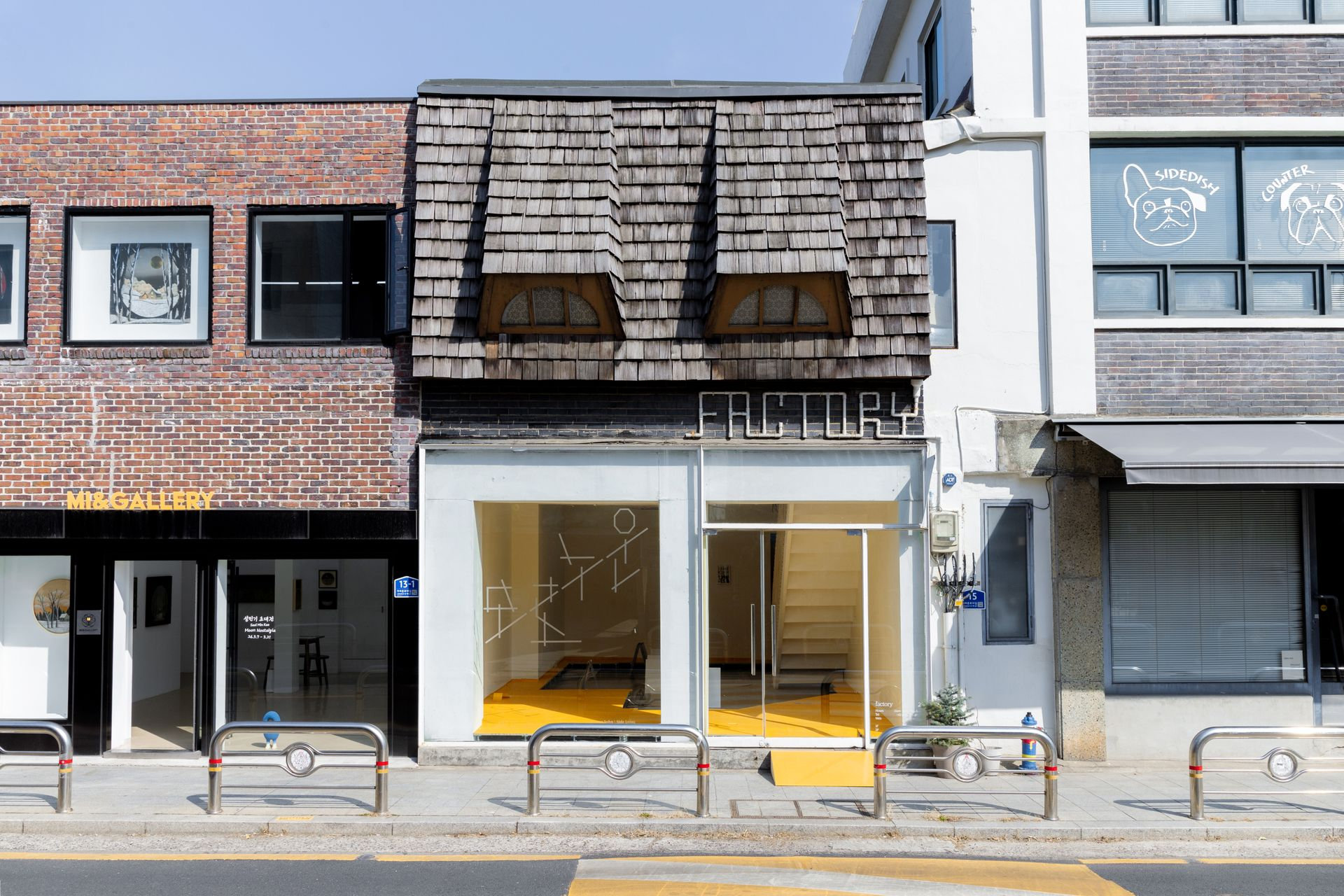
Upon entering the exhibition space, the first thing that captures the viewer’s attention is a striking expanse of yellow spreading across the floor. Moro Nou un (Side Lying) by Sohn Younwon begins from this subtle bodily awareness. The exhibition does not present space as something to be viewed, but rather reveals how the body senses, occupies, and departs from it.
In contemporary Seoul, the notion of “home” no longer functions as a stable foundation for life. With rapidly rising housing costs, for many, a home is no longer something to own but rather a temporary stopover. For those in their 20s and 30s, dwelling is not about settling, but about continuous movement. The distinction between “where one lives” and “the state of dwelling” becomes increasingly fragmented. While the home still symbolically represents stability in Korea, lived reality is increasingly shaped by temporary conditions.
Within this context, the floor is no longer a given foundation. It becomes something that can be measured, folded, transported, and reconfigured. Sohn Younwon has physically folded and carried portions of floors from spaces she has inhabited-shared house staircases, a newlywed balcony, and her current living room-transforming them into a continuous sculptural series. Once detached from their original contexts, these spaces are no longer “home,” but become units of memory preserved in folded form.
In modern art, the floor has long ceased to be a neutral background. After Carl Andre, the floor shifted from being a site where sculpture is placed to a plane directly experienced by the body, while Lygia Clark expanded it into a field where sensation and relational experience emerge.
Sohn Younwon’s work moves beyond this trajectory. Her floor no longer simply supports the body; it is folded, unfolded, and relocated, carrying the memory of its original site while repeating across different locations. What emerges is not mere replication, but a relational structure that connects different times and places.
The folded floor preserves traces of the past while unfolding again in new contexts to be shared with others. A space that begins as a personal experience expands into the sensory field of others, and memory becomes something continuously reconfigured through relationships. The work ultimately reveals how the desire to retain traces of a once-inhabited place evolves into a structure of connection with others.
Measured and Folded Floor
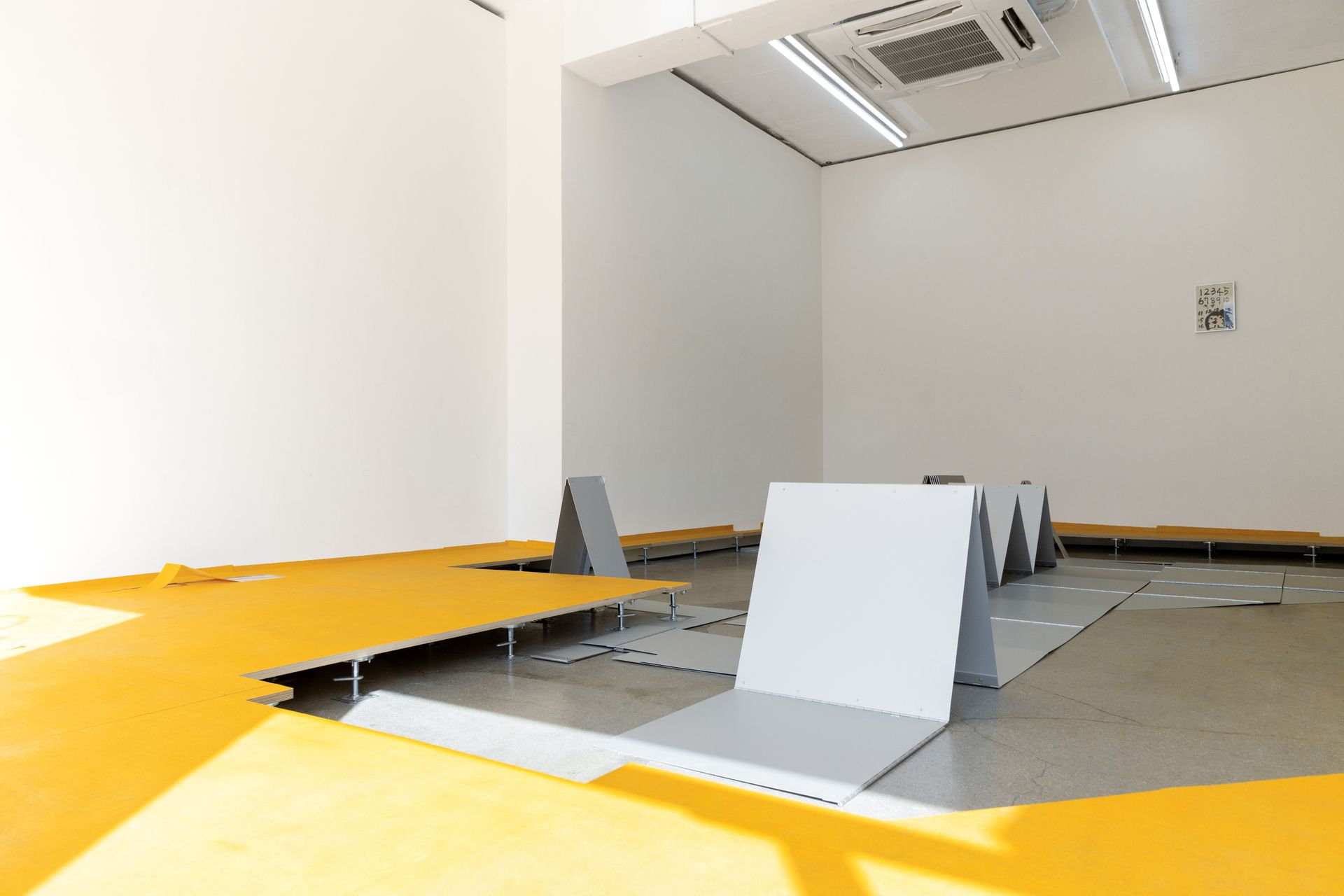
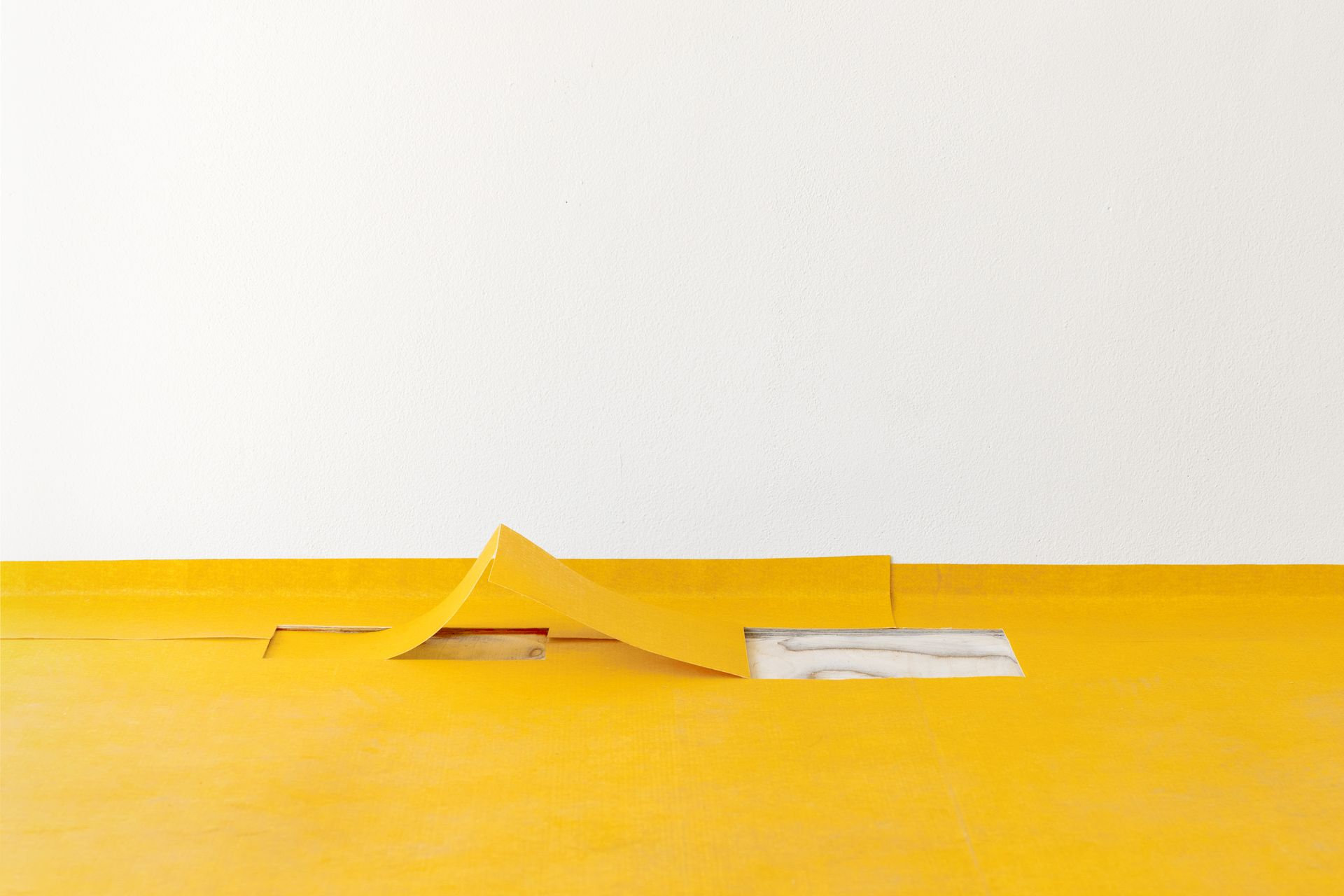
The floor of the exhibition is not a singular plane. The yellow surface, extending from outside to inside, binds the space into a continuous flow. Made of traditional kongdaem paper, repeatedly coated with soybean oil, it recalls the materiality of Korean flooring and evokes tactile memories of warmth and bodily pressure.
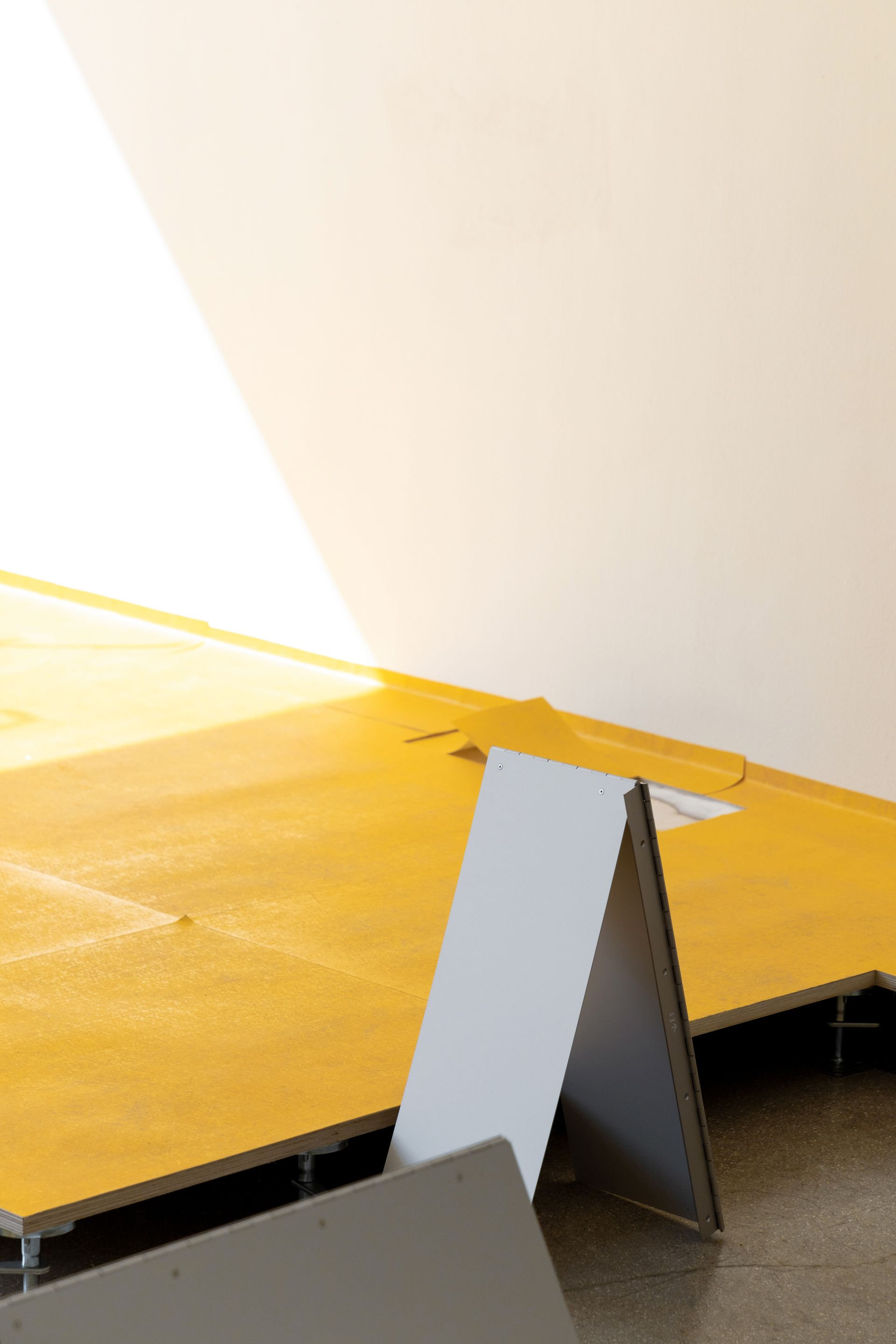
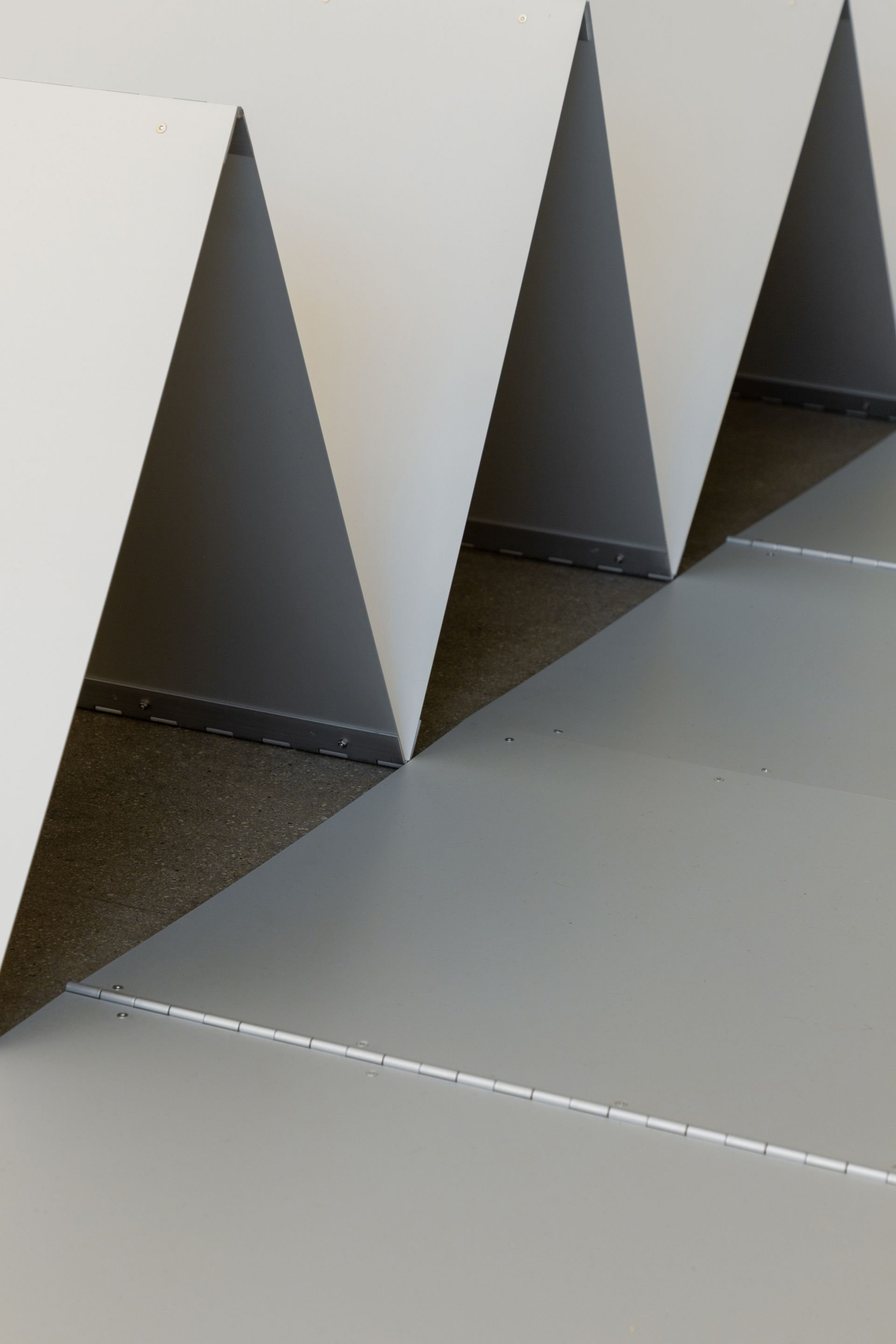
In contrast, ninety-three aluminum plates (50 × 50 cm each) are connected by hinges, forming a structure that bends, rises, and folds into zigzagging configurations. The smooth surface, which leaves no trace of fingerprints, simultaneously suggests familiarity with domestic space and the cold, sharp presence of industrial material.
These two layers coexist while producing distinct sensory experiences. The warmth of the paper floor and the cold abstraction of the aluminum disrupt one another, rendering the floor not as a stable ground but as a fractured and constructed condition. This tension reveals that the floor is not merely a physical plane, but a conditional space where body and culture are deeply intertwined, making the viewer’s experience itself the basis for interpretation.
The Body Between Staying and Leaving
This dissonance induces a subtle hesitation in the viewer. It is not simply a clash of sensations, but reflects the contemporary condition in which spaces that once supported the body are becoming increasingly dematerialized and standardized. The warm, tactile floor and the impersonal metal surface suggest that we no longer inhabit spaces, but merely pass through them.
The floor is slightly elevated from the ground, creating a soft yet unstable sensation unlike that of solid concrete. Standing on it, the viewer does not feel firmly grounded, but rather momentarily suspended.
The viewer’s response is not singular. For some, it manifests as cautious distance; for others, as an urge to intervene or as a playful tension. The exhibition does not impose a fixed emotional response, but instead presents a condition in which multiple reactions coexist. Staying becomes not a completed state, but an unstable process.
Folded Space, Layered Time
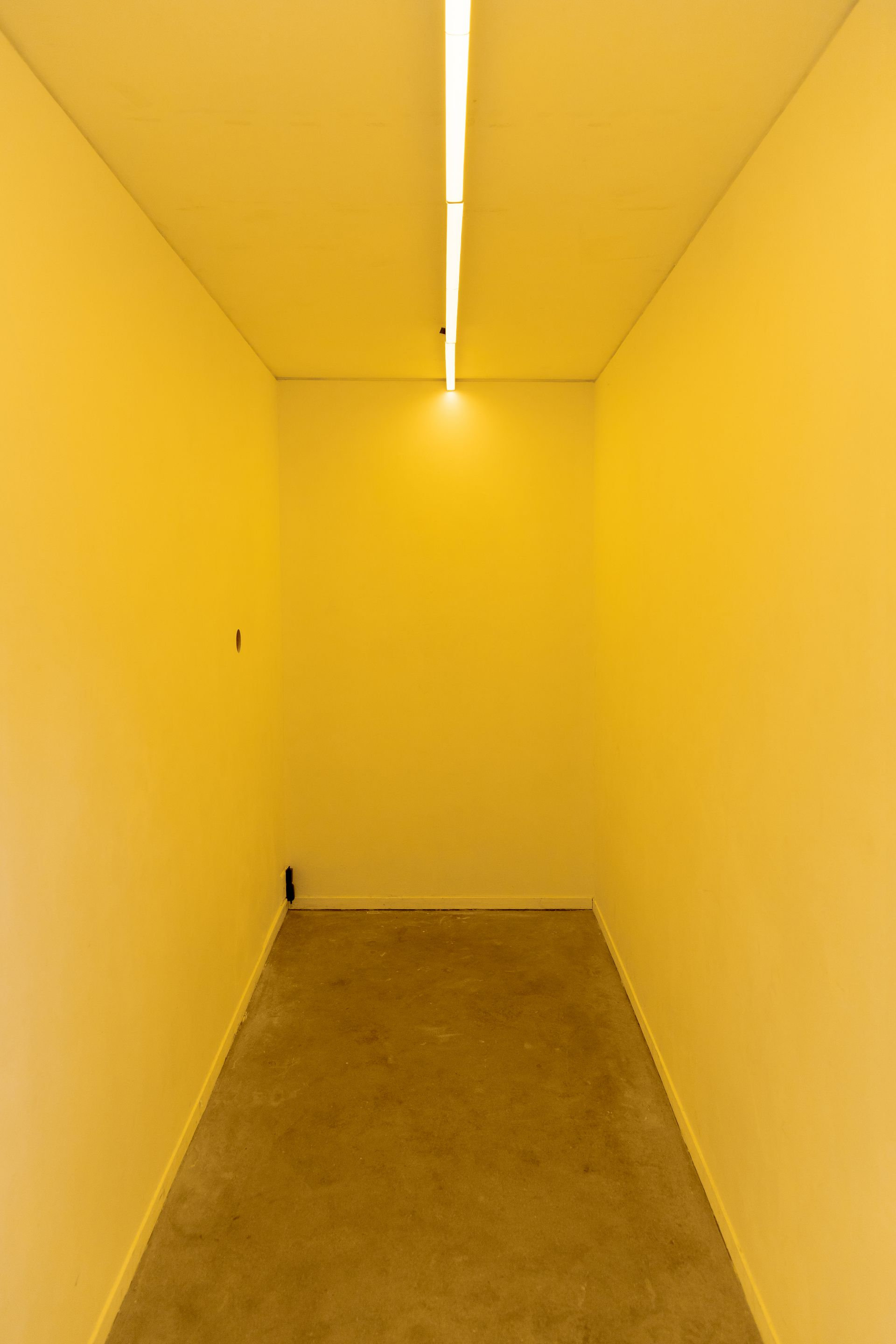
At the edge of the exhibition, a separate space houses the sound work Juana Lee. This project, developed by Sohn Younwon and Andrés Gracia Vidal since 2017, compiles and shares noisecapes recorded in Seoul, Amsterdam, and Seville.
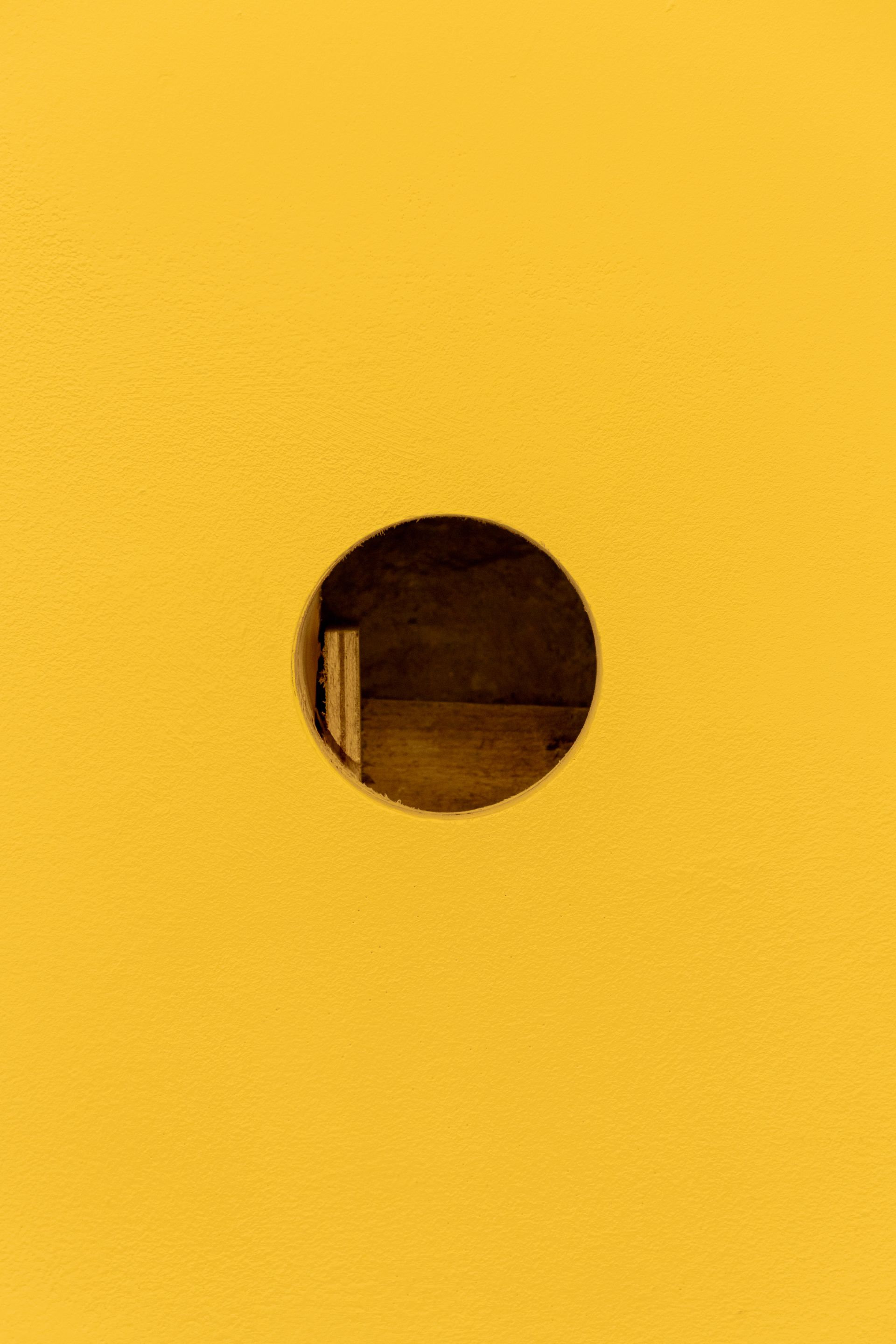
Sound emerges through a small opening in the wall, guiding the viewer’s body into a specific posture. Leaning in to listen, the viewer experiences the space not as singular, but as layered with multiple sensory geographies.
If the floor folds and relocates physically, the sound folds time and experience into the present. Space becomes a site where different temporalities and sensations overlap.
Fragile Traces and Bodily Afterimages
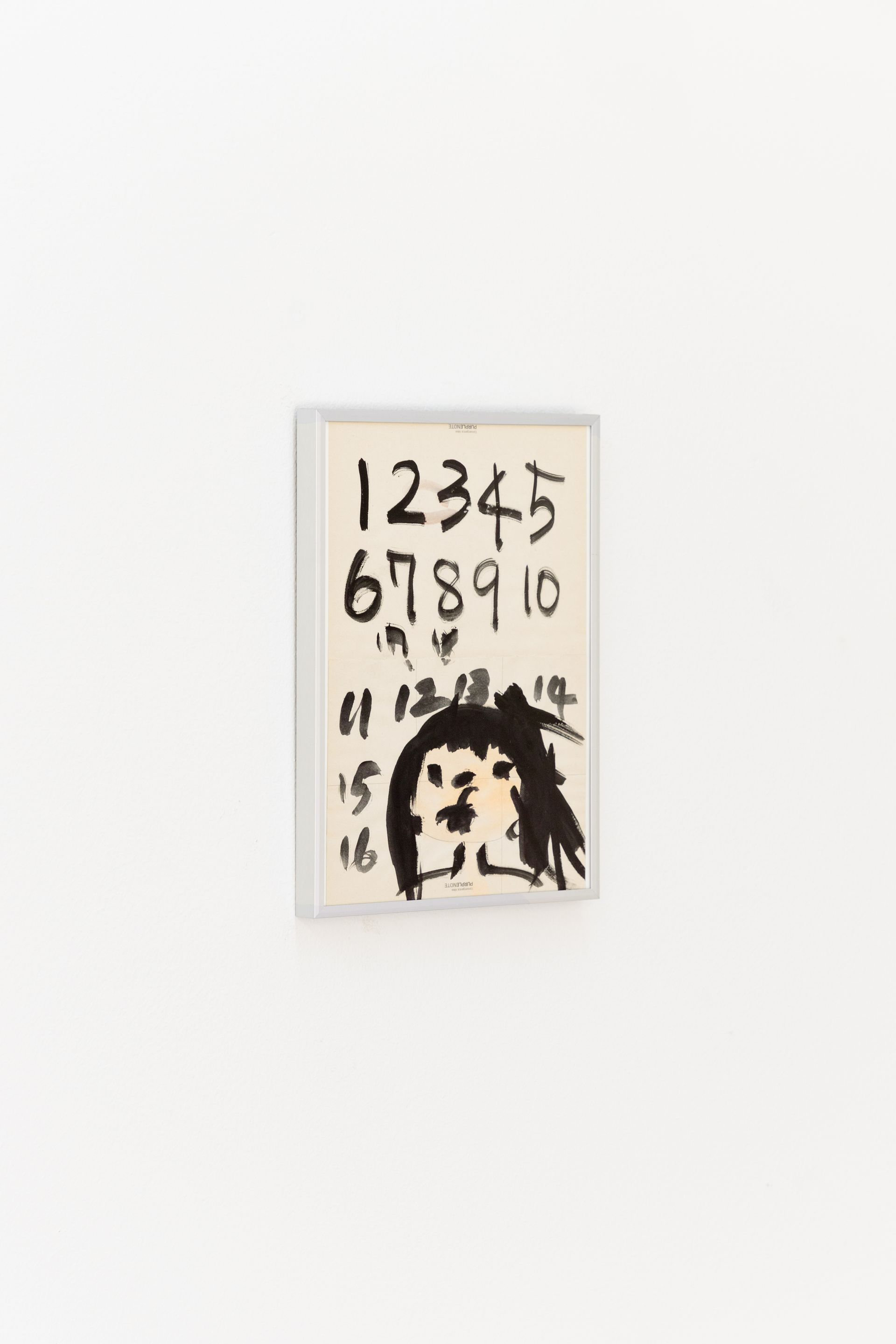
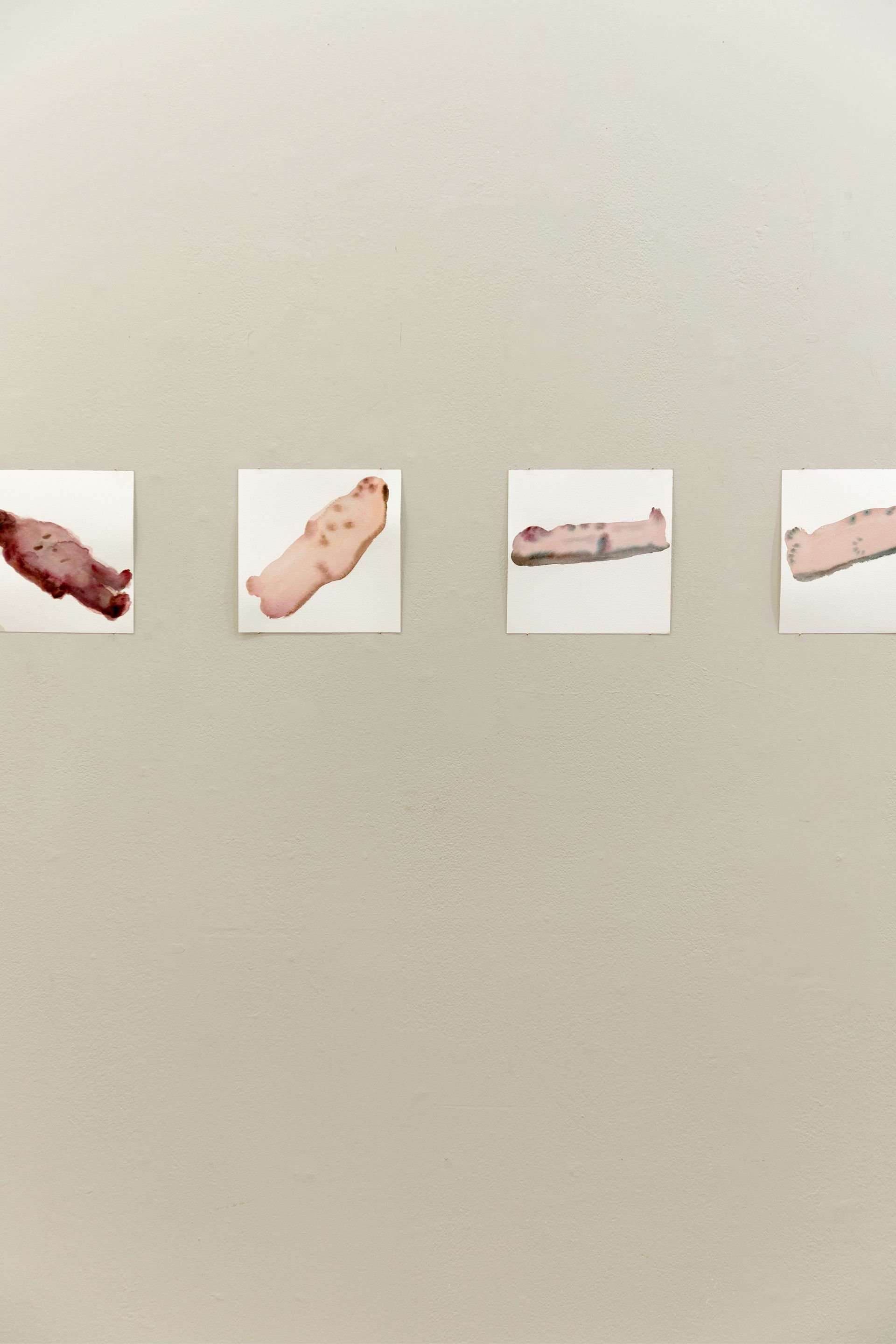
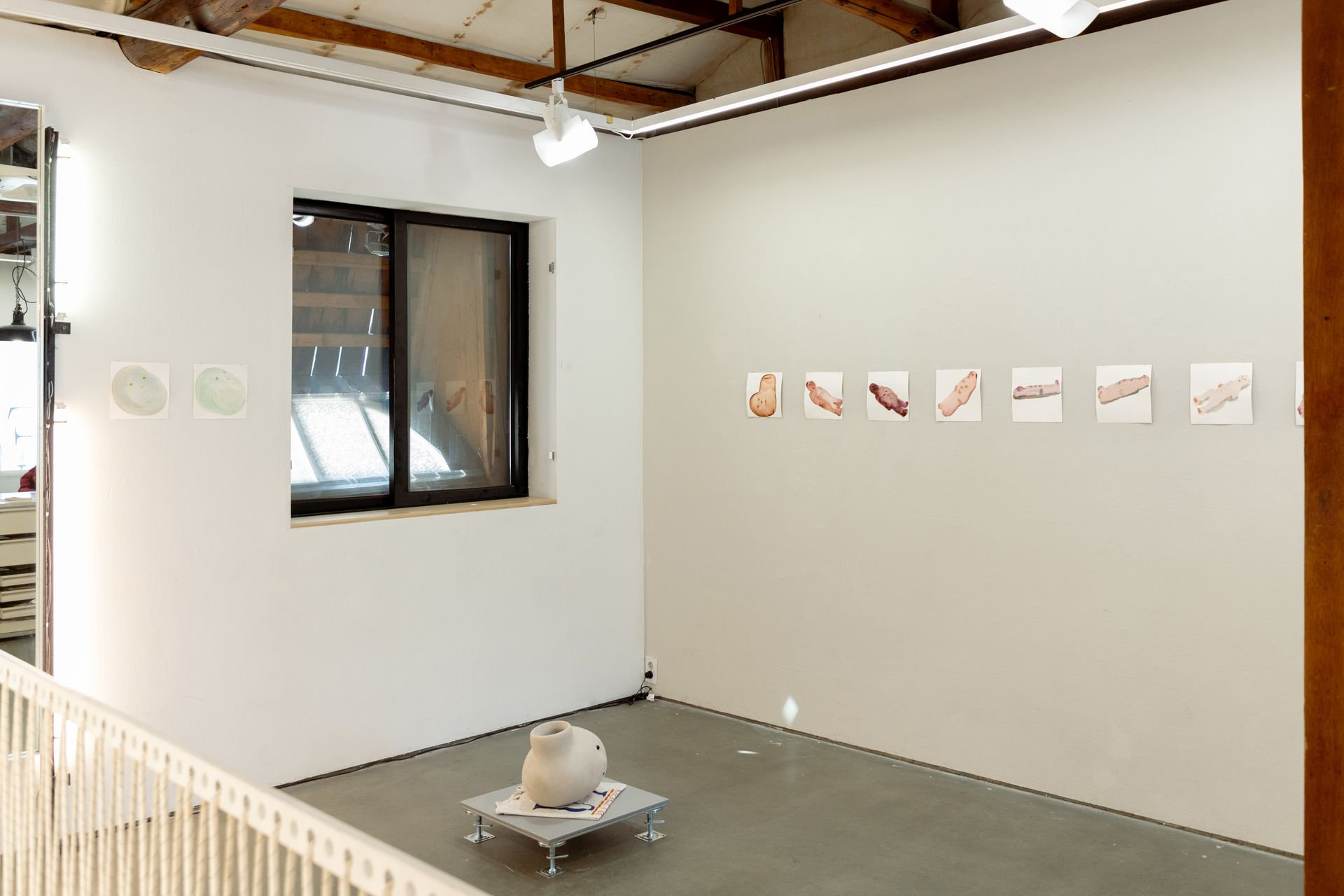
While the first floor emphasizes structural tension, the second floor extends this into fragile bodily traces. The watercolor works depict organic forms created through fluid diffusion, resembling the lingering warmth left by a body lying sideways. They register faint traces of presence.
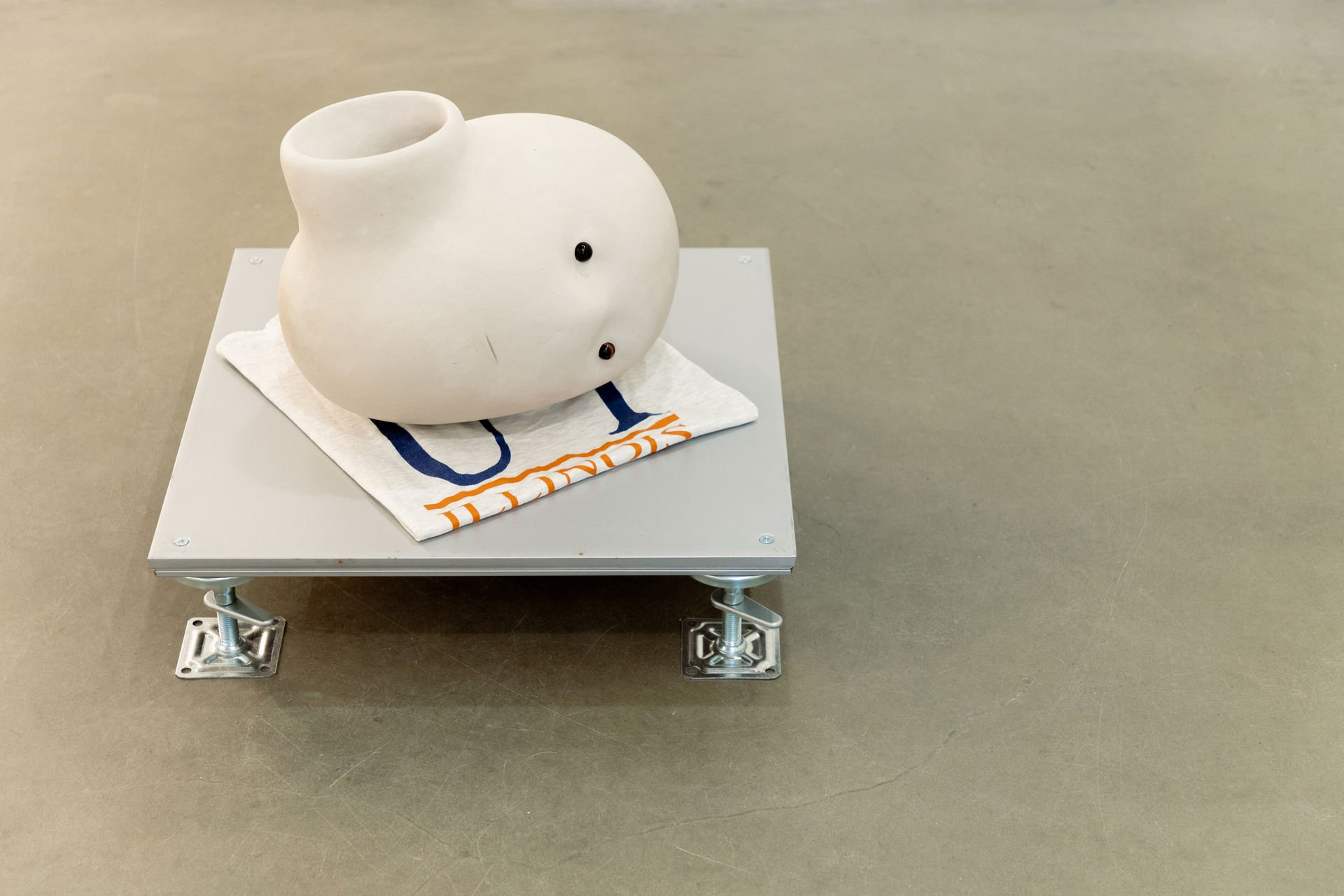
The “face vase” further destabilizes the boundary between body and object. Tilted and unable to function as a container, it rests on a folded T-shirt. The T-shirt is not merely a support, but a direct residue of bodily presence-a remnant of everyday life.
Placed together, the rigid structure, soft fabric, and displaced face disrupt conventional hierarchies between object and body, function and sensation. The vase appears less as a vessel and more as a shell suggesting bodily absence, while the T-shirt remains as its trace.
Objects no longer exist independently; they function as sensory units left behind by the body. The viewer’s gaze lowers, shifting from observation to an embodied relation within space.
Translation Presupposes Failure
The exhibition does not present a complete or resolved form; instead, it reveals a state of unstable balance that remains in constant flux.
Translation is an act of transfer that inherently presupposes failure-the impossibility of complete equivalence. This work exists precisely within that condition of misalignment.
Space never stabilizes into a single form. It is continuously reconfigured through the interplay of body, sensation, structure, and memory. We stand, sit, and lie upon it, forming relationships with space-and in doing so, the very ground we trust begins to shift.
Artist Bio
Sohn Younwon was born in Seoul in 1990 and currently lives and works in Seoul. She received her BFA in Fine Arts from Korea National University of Arts and studied abroad at the Maryland Institute College of Art during her undergraduate years. She later earned an MFA in Sculpture from Seoul National University and another MFA in Fine Arts from the Sandberg Instituut in Amsterdam. She is currently teaching at Korea National University of Arts. Since her debut in the 2017 relay exhibition Cave Night, she has held four solo exhibitions and participated in numerous group exhibitions.